Sooner or later, every homeowner ends up here: the AC or furnace is down, there's a repair quote in one hand, and somebody has just said the words "honestly, you might want to think about replacing it." Repair or replace? It's a genuinely hard decision (a repair might be hundreds of dollars, a new system is thousands), and it usually lands on the hottest or coldest week of the year, when you're least equipped to think it through. So here's the exact framework we walk through with homeowners at the kitchen table. No pressure, no scare tactics: just the questions that actually decide it.
Start with age, but don't stop there
According to ENERGY STAR, it's time to consider replacement when a central air conditioner or heat pump is more than 10 years old, or a furnace is more than 15. Around here, systems tend to land toward the harder-worn end of that range: a Piedmont AC works long summers, and many of our heat pumps run in both directions nearly year-round.
But age alone doesn't condemn a system. A 12-year-old unit that's been maintained, holds its refrigerant charge, and has never had a major failure can have real life left. Age matters most in combination with the next three factors.
The $5,000 rule (a rule of thumb, not a law)
Here's a quick gut-check the industry uses: multiply the age of the system by the cost of the repair. If the result is over about $5,000, replacement usually deserves a serious look. Under it, repair is often the smarter money.
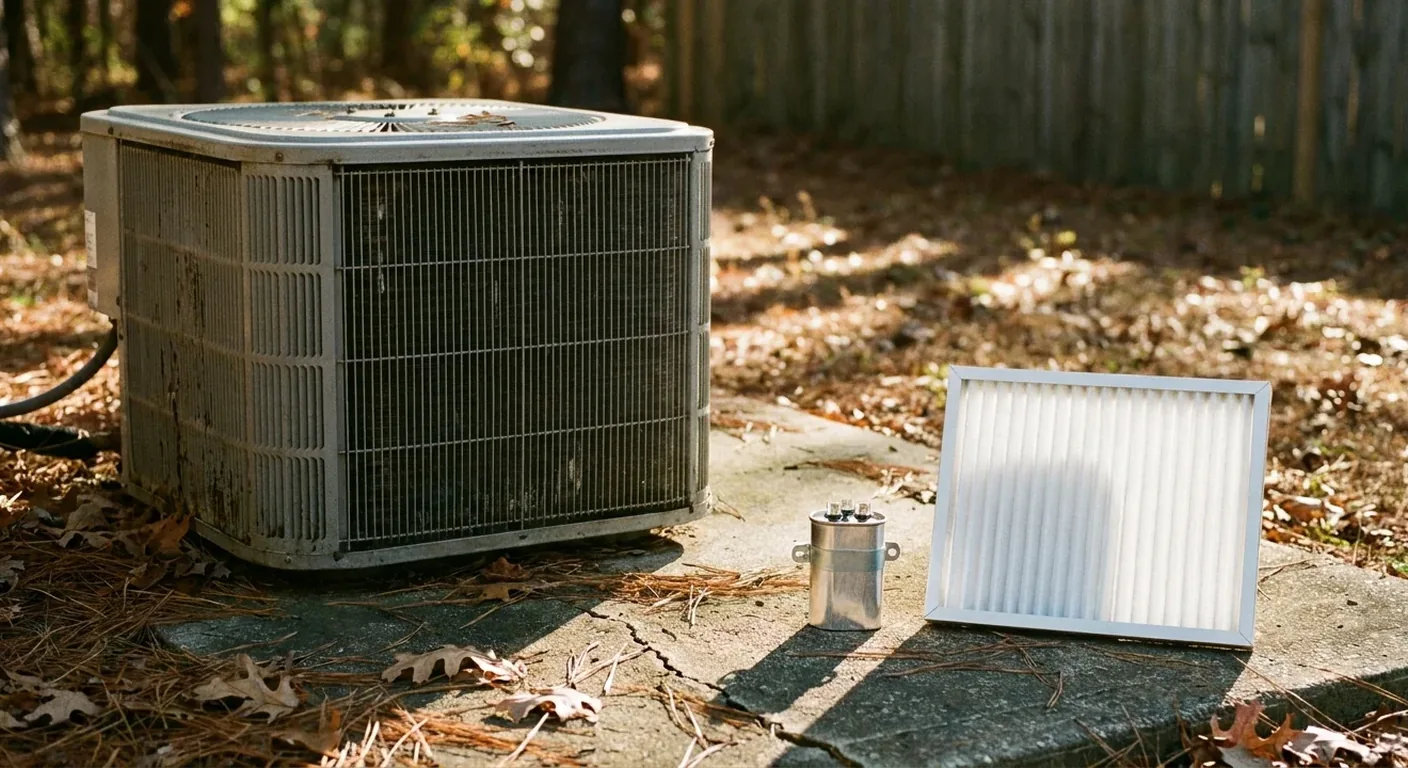
- A $400 capacitor-and-fan-motor repair on an 8-year-old system: 8 × $400 = $3,200. Repair it.
- A $1,500 repair on a 14-year-old system: 14 × $1,500 = $21,000. Time for the replacement conversation.
It's not a law of physics: it's a way to keep a stressful decision honest. It stops you from putting a major repair into a system that's near the end either way, and it stops anyone (including your HVAC company) from talking you into a $12,000 system over a $300 part.
What refrigerant does it use? This one's gotten expensive
If your AC or heat pump was installed before roughly 2010, there's a good chance it runs on R-22 refrigerant (Freon). The EPA ended production and import of R-22 in January 2020, so any R-22 a technician adds today comes from a shrinking recycled supply, and the price shows it. A leak repair plus a recharge on an R-22 system can approach a meaningful fraction of a new system's cost, on equipment that's already 15+ years old.
Our honest take: putting significant money into an R-22 system in 2026 is rarely the right call. A small electrical repair to limp through a season, maybe. A compressor or a full recharge, almost never.
Not sure what refrigerant you have? Look at the data plate on the outdoor unit: it lists the refrigerant type (R-22 or R-410A). Snap a photo of that plate and text or read it to whoever you call for service; it helps us quote accurately before we roll a truck.
Repair frequency: the every-season pattern
One repair is a repair. A repair every season is a pattern (and if the failures keep announcing themselves the same ways, our guide to AC warning signs covers what each one means). If you're on a first-name basis with a service tech (capacitor last July, blower motor in October, contactor this spring), those bills are telling you something the individual visits don't: the system is wearing out as a whole, and you're paying for it on the installment plan. Add up the last two years of repair invoices before you approve the next one. Homeowners are often surprised what the total already is.
The bills and the bedrooms
Two quieter signals round out the picture:
- Energy bills creeping up year over year, with no change in your habits or rates, usually mean the system is losing efficiency: working harder to deliver the same comfort. Federal minimum efficiency standards have risen substantially since older systems were built, so a like-for-like replacement is often meaningfully cheaper to run, especially on a system from the 2000s.
- Comfort problems that never quite get fixed: the bedroom that's always hot, the sticky, humid feeling even when it's cool, the system that runs constantly on design days. Sometimes that's a repair; sometimes it's a sign the system is undersized, oversized, or simply past its ability to keep up.
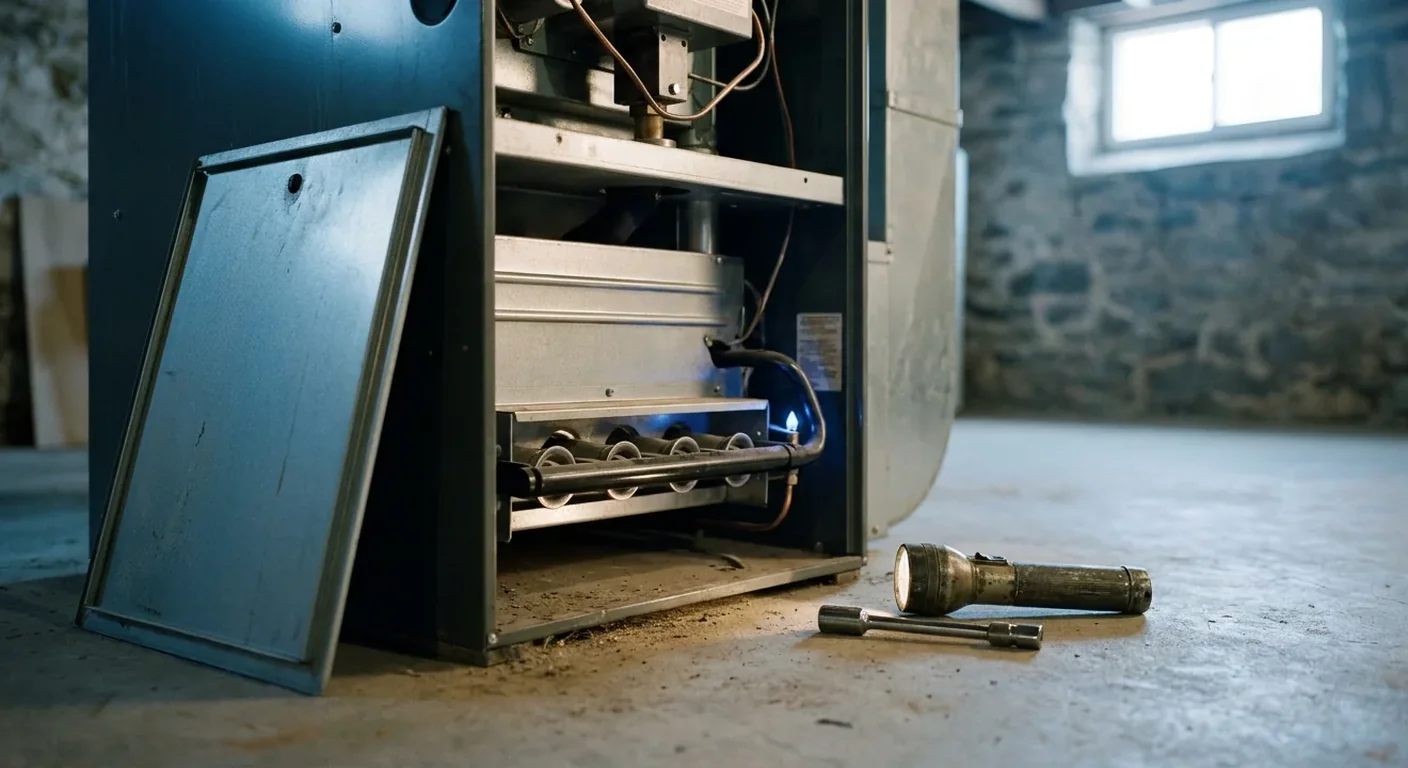
One case where we won't recommend a repair: a cracked heat exchanger in a gas furnace. A cracked heat exchanger can allow combustion gases, including carbon monoxide, into your home's air. If a technician shows you a cracked heat exchanger (ask to see it; a reputable tech will show you, and we always will), that furnace's repair-vs-replace debate is over.
When repair is genuinely the right call
Replacement isn't always the answer, and we'd rather tell you that plainly than earn it the wrong way. Repair usually wins when:
- The system is under about 10 years old: most failures at that age are single components, not systemic.
- It's the first significant repair the system has needed.
- The failed part is minor: capacitors, contactors, fan motors, thermostats, drain issues. These are normal wear items, not death sentences.
- The system has been maintained and the rest of it checks out sound. (Regular seasonal maintenance is exactly what keeps a repairable system repairable.)
Facing this decision right now?
We'll give you a flat-rate quote for the repair and a straight answer about whether it's worth it, including when the answer is “just fix it.” If replacement does make sense, financing is available through Hearth with monthly payment options.
Repair or replace: the quick reference
| Leaning repair | Leaning replace |
|---|---|
| Under ~10 years old | AC/heat pump 10+, furnace 15+ (ENERGY STAR guidance) |
| First major repair | A repair every season for the last couple of years |
| Minor component (capacitor, contactor, fan motor) | Compressor, coil, or heat exchanger failure |
| Age × repair cost well under $5,000 | Age × repair cost over $5,000 |
| Runs R-410A | Runs R-22 (Freon): supply ended in 2020 |
| Bills stable, house comfortable | Bills climbing, rooms uneven, humidity sticky |
How we handle it, for what it's worth
When you call us out for a failed system, you get a diagnosis and a flat-rate repair quote before any work starts. If the numbers above say repair or replace tips toward replacement, we'll price both paths and tell you which one we'd choose for our own house, and our techs aren't paid commission to steer you either way. A new system is a big decision. You should get to make it with real information, on your own schedule, from somebody who'll still be your neighbor next year.
Questions about your specific system? Call (704) 461-0252. We're happy to talk it through before you commit to anything.
Frequently asked questions
How long does an air conditioner last in North Carolina?
Plan on the 10–15 year range for a central AC or heat pump, and longer for a gas furnace. Our long cooling season puts Piedmont systems toward the harder-worn end of national averages, and maintenance history matters as much as the calendar.
What is the $5,000 rule for deciding to repair or replace an AC?
Multiply the system's age by the repair cost. Over roughly $5,000, replacement deserves a serious look; under it, repair is usually the smarter money. It's a sanity check, not a law: age, refrigerant type, and repair history still matter.
Is it worth repairing an R-22 (Freon) system?
Rarely, beyond a small electrical fix to finish a season. R-22 production ended in 2020, the remaining supply is expensive, and any system old enough to use it is near the end of its design life anyway.
Can I finance a new HVAC system?
Yes, financing on new system installations is available through Hearth, with monthly payment options. We'll walk you through what's available before you commit to anything, and a maintenance plan can help your new system reach a full, healthy lifespan.
Last updated July 6, 2026.