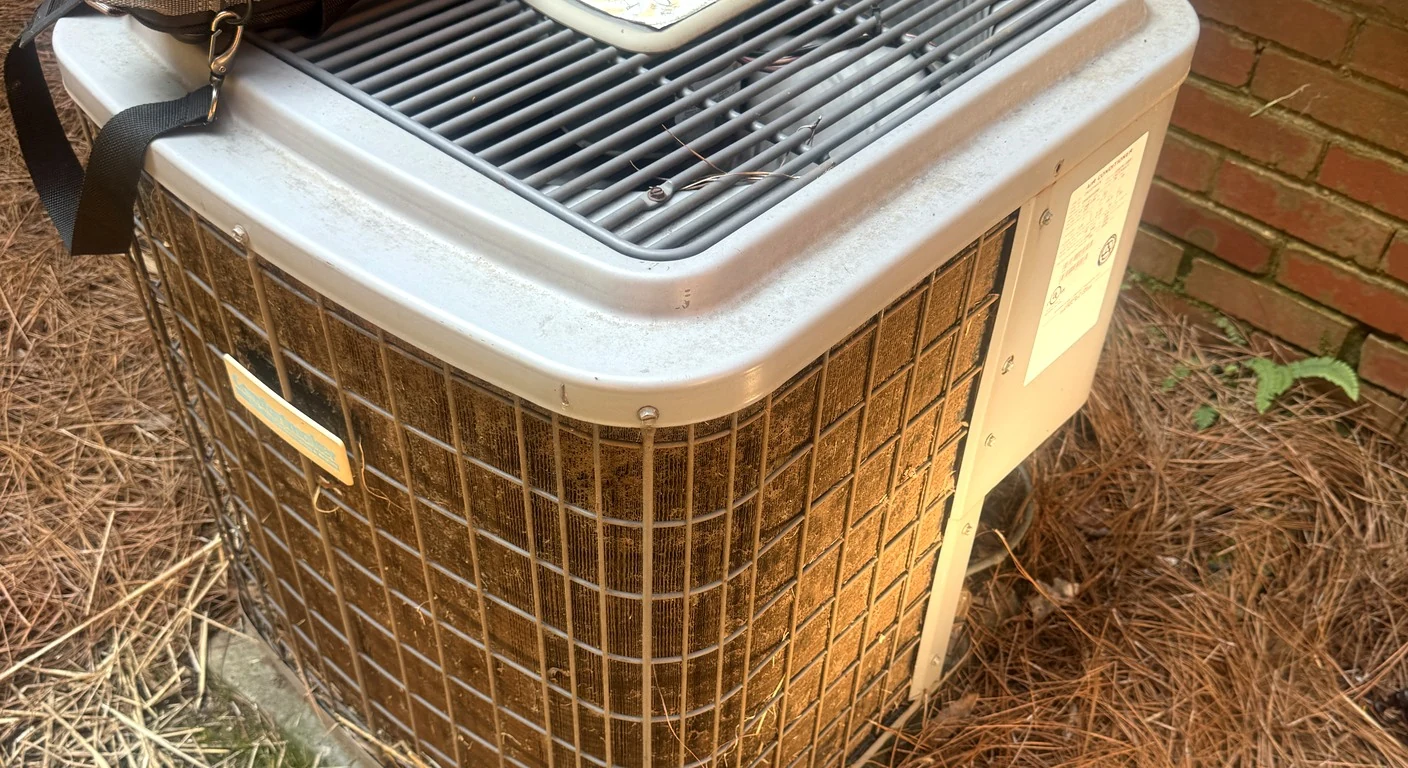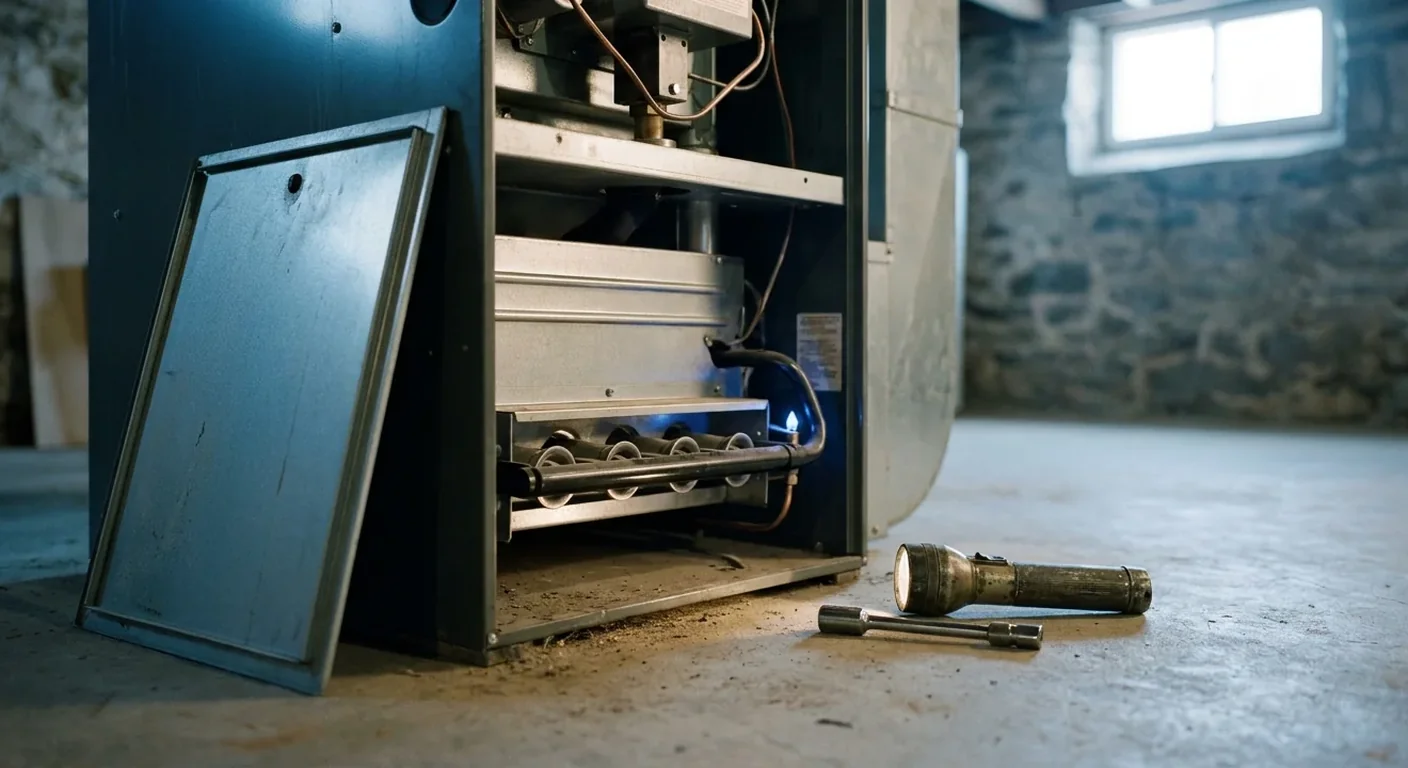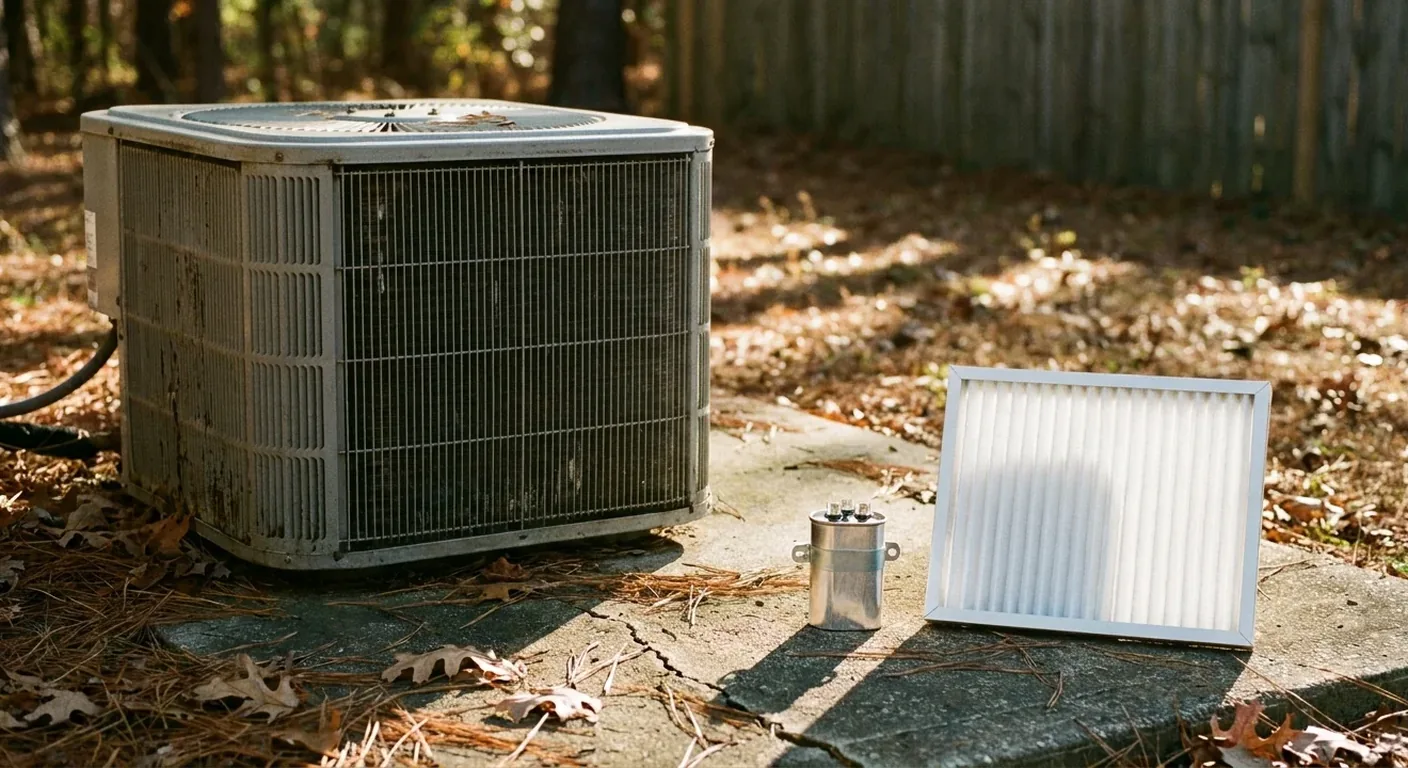
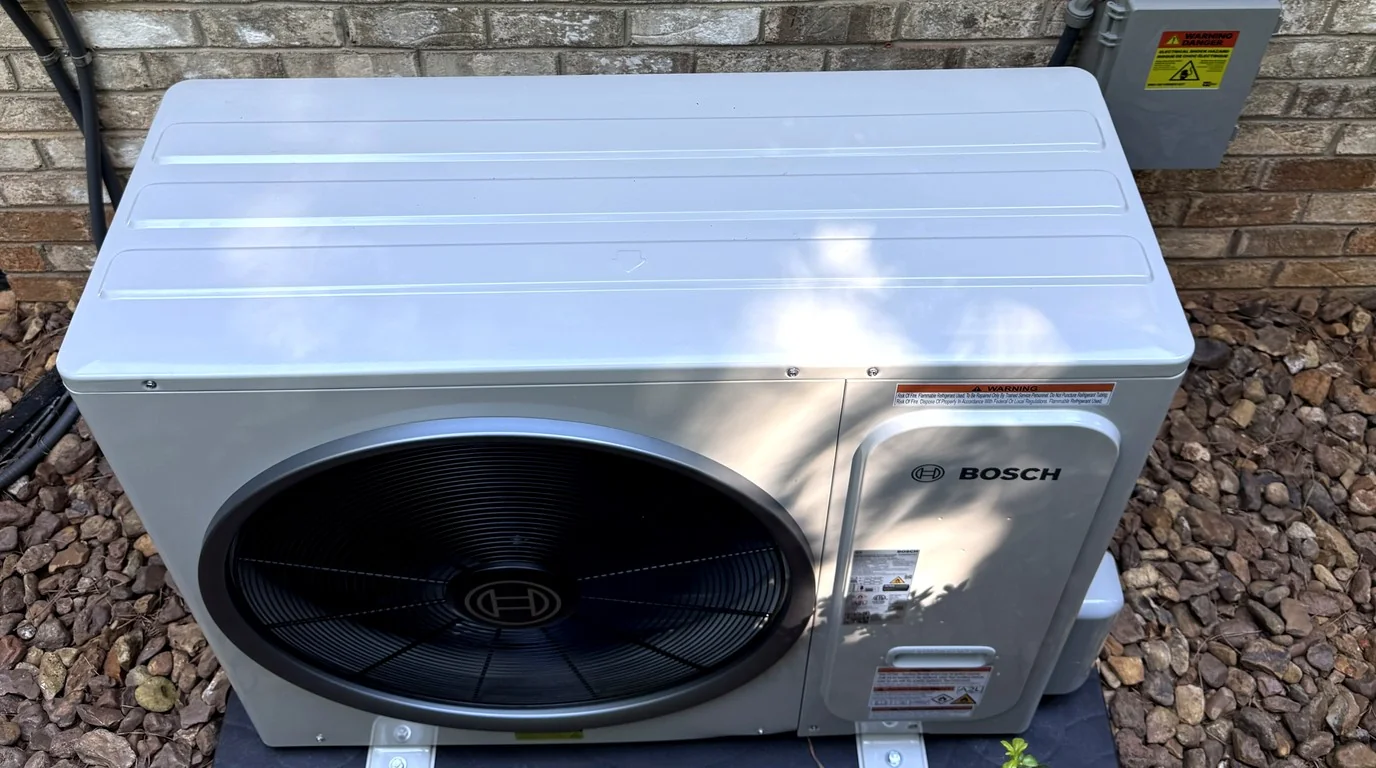
Heat pump repair in Belmont costs anywhere from about $100 for a capacitor to close to $3,000 for a compressor, and most of the calls we run in October and November land in the low hundreds. According to Fixr (updated January 21, 2026), the average heat pump repair is $400, with a typical range of $150 to $650. Trane (August 19, 2024) is wider, quoting $100 to $5,000 and up with an average of $550. Both spreads are honest. What sits between them is which part failed.
The reason you're reading this in the fall isn't a coincidence. A heat pump spends the summer as an air conditioner and the winter doing something harder, and the first genuinely cold mornings are when the difference shows. If yours is making a new noise or the house isn't keeping up, call (704) 461-0252. JR Buchanan has been in the trade 27 years and holds NC license #37008, and you get a flat price before any work starts.
Why heat pump repair calls in Belmont start right around Halloween
Belmont's average first frost is October 30, according to frost-date data for Gaston County built on NOAA's 1991 to 2020 climate normals. The NC Cooperative Extension puts the average first hard freeze at the Gastonia station a week later, November 6. So there's a fairly predictable two-week window each fall when local systems get asked to do real heating work for the first time since March.
The temperatures matter more than the dates. At Charlotte Douglas, the nearest station with NOAA climate normals, the October average low is 50.4 degrees and the November average low is 39.8. That is a 10.6-degree drop in the average overnight low across a single month, and it's where a heat pump changes behavior. In the 50s it barely has to work. Under 40 it starts frosting its outdoor coil, running defrost cycles, and pulling in backup heat. Every one of those is a new mechanical demand on a system that coasted all summer.
Which is why the heat pump repair calls cluster here and not in August. Nothing broke on the first cold morning. It broke earlier, quietly, and the cold is what asked the question.
Steam off the outdoor unit is normal. A block of ice isn't.
The single most common reason somebody calls us about a heat pump that's working fine: they walked outside and saw what looked like smoke pouring off it.
That is the defrost cycle. Trane explains it (February 19, 2026): the outdoor coil runs 10 to 20 degrees colder than the air around it, so moisture freezes onto it, and blocked airflow kills capacity. The system reverses itself briefly, sends hot refrigerant out to the coil and melts the ice off. Trane puts it at a few minutes, usually 3 to 5 on its own systems. Steam, a pause in the outdoor fan, a change in sound, over in a few minutes. That is normal.
Here is what actually needs heat pump repair:
- A solid shell of ice on the coil that never clears. Defrost is supposed to remove it. Ice that stays means defrost isn't running, and that's usually a sensor or a control board.
- Ice on the top of the unit or on the fan blades. Different problem from a frosted coil, and usually water getting somewhere it shouldn't.
- Defrost running constantly. Every few minutes, all day. The system is chasing a reading that's wrong.
- The outdoor fan not turning at all while the indoor blower runs and the air comes out cool.
If you aren't sure which one you have, take a photo of the outdoor unit before you call. It saves real diagnostic time.
Emergency heat isn't a setting you should live on
Almost every heat pump has electric heat strips behind it, and there are two different ways they come on. Getting these mixed up costs people a lot of money every winter.
Auxiliary heat is automatic. HVAC.com describes it kicking in when the indoor temperature falls 2 or 3 degrees behind the thermostat setting, and it runs alongside the heat pump rather than instead of it. On a cold morning, aux heat coming on briefly is the system working as designed.
Emergency heat is a switch you flip. It shuts the heat pump off completely and heats the house on the strips alone. It exists for one situation: the heat pump is broken or iced solid and you need heat tonight. HVAC.com's illustrative math puts a week of it at roughly six times normal running cost. That is their arithmetic, not a promise about your bill, but electric resistance heat is the most expensive way there is to warm a house.
Two rules, then. Aux heat on a 30-degree morning is fine. Aux heat running all day at 50 degrees is a symptom, and the repair is cheaper than a season of strip heat. And if somebody told you to leave the thermostat on Em Heat all winter, they were wrong.
What actually breaks, and what heat pump repair costs in 2026
Most of the heat pump pages you will find for this area don't publish a single repair price. We would rather show you the numbers and tell you where they come from. These are national ranges from three independent published sources, not our quotes. Use them as a map, not a promise.
| Repair | Trane (2024) | HVAC.com (2024) | Fixr (2026) |
|---|---|---|---|
| Capacitor | $100 to $400 | Matches Trane | Matches Trane |
| Thermostat | $90 to $600 | $50 to $200 repair, $200 to $500 replace | $85 to $300 replace |
| Defrost control board | $200 to $650 | $200 to $500 | Not listed separately |
| Reversing valve | $400 to $700 | $400 to $700 | $350 to $700 |
| Refrigerant leak | Varies by refrigerant | $200 to $1,000 | $200 to $1,500 |
| Compressor | $900 to $2,900 | $1,000 to $2,500 | $800 to $2,500 |
| Overall average | $550 average | Not stated | $400 average, $150 to $650 typical |
The cheap end: capacitors, contactors, and sensors
Most fall heat pump repair work lives here. A weak run capacitor is the classic "it hummed and then nothing" call, and Trane puts that at $100 to $400. If you haven't had the heating side looked at yet this year, our fall prep walkthrough covers what to check first. Defrost sensors and control boards are the other common fall failure, because they are the parts that only matter in cold weather and therefore only fail in cold weather. Nobody notices a dead defrost board in July.
The middle: the reversing valve
The reversing valve is the part that makes a heat pump a heat pump. It flips the direction refrigerant flows, which is how one machine both cools in August and heats in January. It is also the part that strands a system in cooling mode. If your heat pump blows cold air when it's set to heat, and the outdoor unit is clearly running, a stuck reversing valve is near the top of the list. Trane and HVAC.com's repair-cost guide both put it at $400 to $700; Fixr starts a little lower at $350.
The expensive end: the compressor
A compressor is the one repair that turns into a replacement conversation. All three sources put it between $800 and $2,900 installed. On a system past its teens, that's often most of the way to a new one, and we will say so rather than sell you the part. If a new system is genuinely the honest answer, financing on installs is available through Hearth, subject to approval.
How a diagnosis actually goes
A proper heat pump repair visit is mostly measurement. JR checks amp draw on the compressor and the blower, temperature split across the coil, static pressure, refrigerant pressures against the outdoor temperature, and whether defrost is calling when it should. Those readings are what separate a $200 part from a $2,000 one, and they are why we don't quote a repair over the phone.
What you get from us in that order: he diagnoses, you get one flat price, you say yes or no, and then work starts. The number you approve is the number you pay. If the diagnosis turns out to be wrong once the cabinet is open, we stop and talk to you before anything changes. And if the fix isn't worth doing on your system, you will hear that too.
If you would rather find the problem before it becomes an emergency, that is what our maintenance plans are for: $199 a year covers a spring check, a fall check, priority scheduling and no diagnostic fee when something does break.
Repair or replace, before you spend anything
Four things decide it, and age alone isn't one of them.
What the repair costs against what the system is worth. A $400 reversing valve on a nine-year-old heat pump is easy. The same valve on a twenty-year-old system is a different math problem.
What refrigerant it runs on. A nameplate reading R-22 means the system is old, though not as old as people usually assume. The 2010 EPA rule stopped new pre-charged R-22 systems, but uncharged ones kept shipping until a 2015 efficiency standard ended them, so call it ten years and up rather than sixteen. The refrigerant is the real problem: none has been produced or imported here since 2020, so a recharge runs on reclaimed stock and is priced like it. The EPA is clear that you aren't required to replace an R-22 system, and we won't tell you otherwise. It does mean a leak on one is rarely a simple repair.
Whether the next failure is already visible. A motor pulling high amps, a contactor already pitted. One repair is a repair. Three lined up is a system telling you something.
What the replacement would actually do for you. ENERGY STAR tests cold-climate heat pumps down to 5 degrees. If yours gives up at 35, that gap is the real argument, not the age on the label. Our repair-or-replace guide walks the whole decision.
Check the license before you let anybody open the cabinet
Cooling-season pricing works the same way, and we publish it too, in our air conditioner repair cost guide. Heating work in North Carolina is licensed by the North Carolina State Board of Examiners of Plumbing, Heating and Fire Sprinkler Contractors, which the General Assembly created in 1931. Under General Statute 87-21, residential forced-air systems with 15 tons of refrigeration or less fall in Heating Group Three, and that's the license class that covers a house.
Asking for a license number isn't rude, and any shop worth hiring has it ready. Ours is NC #37008, it's on the truck, and it's on the invoice.
Heat pump repair in Belmont and Gaston County
We are in Belmont, at 32 N Main Street, and we run heat pump repair calls in Belmont, Gastonia, Mount Holly, Cramerton, Dallas, and Hickory. If your heat isn't coming on, the shortest version of this whole article is: check that the thermostat is switched to Heat, check the filter, check the breaker and the service switch, and then stop. Call (704) 461-0252 and we will come read the numbers.
Frequently Asked Questions
Why is my heat pump blowing cold air when it's set to heat?
Usually mid-defrost, which Trane puts at a few minutes and is normal. Much longer than that with the outdoor unit clearly running points at a stuck reversing valve, $350 to $700 across our three sources.
Is it normal for my heat pump to be covered in frost?
Light frost on the outdoor coil is normal and the defrost cycle clears it. A thick shell of ice that never clears isn't, and it usually means a defrost sensor or control board, $200 to $650 at Trane. Shut it off and call before the ice reaches the fan.
How much does heat pump repair cost in Gaston County?
We don't publish local averages we can't source. Nationally, Fixr puts the average at $400 with most jobs $150 to $650, and Trane at $550 across a wider range. Fall work sits at the lower end. You get a flat-rate number for your system before any work starts.
Should I run emergency heat when it gets cold?
Not as a routine. It shuts the heat pump off and heats on electric strips alone, which the explainer below puts at roughly six times normal running cost for a week. Use it the night the heat pump is down, then get it repaired.
How long should a heat pump last around here?
Long enough that age by itself is a weak signal. What we actually look at is the refrigerant it uses, the condition of the coil and the electrical parts, and whether repairs are starting to stack. ENERGY STAR's guidance is to consider replacement once repairs keep coming while bills climb.
Do you charge extra to come out for heat pump repair after hours?
Call and ask, and you will get the number before we dispatch, not after. The whole point of quoting flat is that there's no meter running while somebody hunts a part.
Last updated October 6, 2026.
Sources
- Trane: What Is the Heat Pump Defrost Cycle? (February 19, 2026)
- Trane: Average Heat Pump Repair Cost (August 19, 2024)
- HVAC.com: A Guide to Heat Pump Repair Costs (November 1, 2024)
- Fixr: How Much Does Heat Pump Repair Cost in 2026? (updated January 21, 2026)
- HVAC.com: What Is My Heat Pump's Emergency Heating Setting? (July 31, 2023)
- ENERGY STAR: Air-Source Heat Pumps
- NOAA NCEI: U.S. Climate Normals, 1991 to 2020 (Charlotte Douglas station)
- Frost dates for Belmont, Gaston County NC (from NOAA 1991 to 2020 normals)
- NC Cooperative Extension: Average First and Last Frost Dates (Gastonia station)
- North Carolina General Statute 87-21: Heating group definitions
- NC State Board of Examiners of Plumbing, Heating and Fire Sprinkler Contractors
- U.S. EPA: Phaseout of Class II Ozone-Depleting Substances (the HCFC-22 schedule)
- U.S. DOE: Regional Standards Enforcement Q&As (heat pumps manufactured from January 1, 2015 must meet 14 SEER; compliance runs on manufacture date)
- U.S. EPA: Purchasing and Repairing Home Air-Conditioners or Heat Pumps